

 All THCA Flower
 All THCA Pre-Roll










 Spend & Save: Get 10% off orders $100+ | 15% off orders $150% | 20% off orders $200+




Beyond the Loophole: The Real Science of THCA, Delta 8, and Delta 9 (And Which One You Actually Want)

The Cannabinoid Alphabet Soup: Why the Difference Matters
Walk into any gas station or hemp shop today, and you’ll find shelves stacked with products promising relaxation, euphoria, or relief — all technically “legal.” But understanding the delta 8 vs delta 9 vs THCA distinction isn’t just a chemistry lesson. It could be the difference between a predictable experience and a genuinely unpleasant one.
The 2018 Farm Bill changed everything by legalizing hemp and its derivatives, provided they contain less than 0.3% Delta-9 THC by dry weight. That single threshold triggered an explosion of hemp-derived cannabinoids flooding the market — some naturally occurring, some synthetically processed, and many operating in regulatory gray zones with little oversight.
“Legal” and “identical in effect” are not the same thing — and in an unregulated space, that gap can cost you more than money.
The FDA has raised concerns about inconsistent lab testing and unknown purity standards across hemp-derived products. Without rigorous third-party testing, consumers have no reliable way to verify what they’re actually consuming.
Bottom Line: Three cannabinoids dominate today’s market — THCA, Delta 8, and Delta 9. They share a family resemblance but behave very differently in your body. Knowing how starts with understanding where each one comes from.
The sections ahead break down each compound individually — starting with THCA, the raw precursor hiding one of the market’s biggest surprises.
THCA: The Non-Psychoactive Precursor with a Secret

Shop THCA Flower
Of all the cannabinoids crowding those gas station shelves, THCA — tetrahydrocannabinolic acid — might be the most misunderstood. On paper, it looks almost identical to the THC most people know. In practice, the difference is enormous.
THCA is the raw, acidic precursor to THC. According to ACS Lab, it carries an extra carboxyl group in its molecular structure — a small chemical addition that completely blocks it from binding to CB1 receptors in the brain. No CB1 binding means no psychoactive effect. Eat a raw cannabis leaf, and nothing notable happens.
Here’s where it gets interesting.
The Decarboxylation Switch
Heat changes everything. As experts explain, “THCA is not psychoactive in its raw form, but when heated through smoking, vaping, or cooking, it converts into Delta-9 THC.” This process is called decarboxylation — essentially, heat drives off that extra carboxyl group, and the molecule transforms into fully active Delta 9.
THCA is, in effect, Delta 9 in a dormant state — one lighter flame away from becoming exactly what you’d find in traditional cannabis.
🔬 Science Corner: What Happens During Decarboxylation?
Raw THCA has the chemical formula C₂₂H₃₀O₄. When exposed to heat (typically above 220°F), it loses a CO₂ molecule and converts to Delta-9 THC: C₂₁H₃₀O₂. That single carbon dioxide molecule departing is the entire difference between a non-intoxicating compound and a psychoactive one.
The Legal Loophole Hiding in Plain Sight
This chemistry creates a significant regulatory gap. Hemp flower high in THCA tests as federally compliant before combustion — because raw THCA technically isn’t Delta 9. Once smoked, however, it behaves exactly like traditional cannabis. The potency debate around THCA flower is frankly worlds apart from conversations about delta 8 vs delta 9 effects, which involve synthesized cannabinoids operating through different pathways entirely.
Understanding this conversion process sets the stage for why Delta 9 itself — the fully activated end product — remains the benchmark against which every other cannabinoid gets measured.
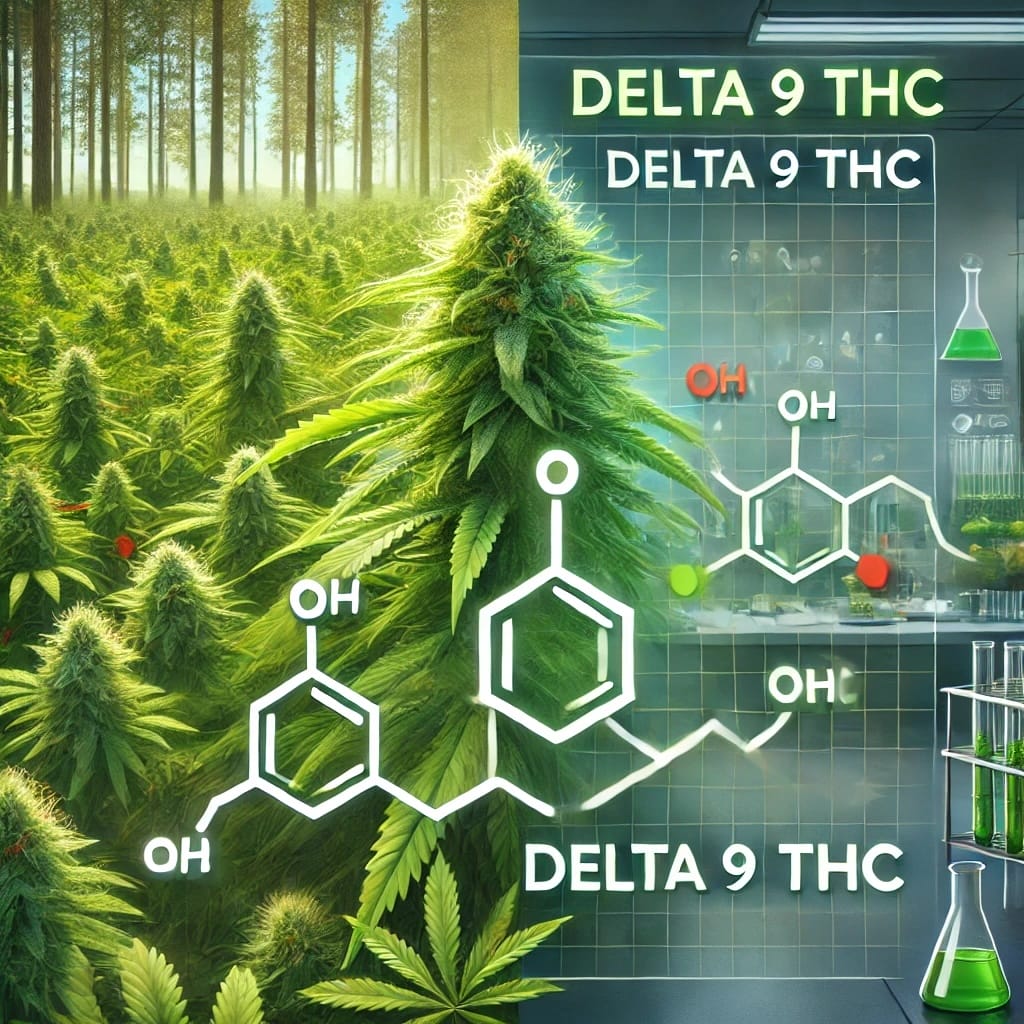
Delta 9 THC: The Traditional Standard
Shop Delta 9 Products
Now that we’ve unpacked THCA’s deceptive simplicity, it’s worth establishing the molecule that started the entire conversation: Delta 9 THC.
What It Is
According to Healthline, Delta 9 THC is the most abundant and well-known psychoactive cannabinoid found in the cannabis plant. It’s the compound researchers have studied for decades, which makes it the de facto benchmark against which every other cannabinoid — including those in the delta 8 THC vs THCA conversation — ultimately gets measured. When someone says “THC,” they almost always mean Delta 9.
How It Feels
Delta 9 produces the classic cannabis experience most people recognize. Common effects include:
- Euphoria and elevated mood
- Deep physical relaxation
- Heightened sensory perception
- Increased appetite
- Potential side effects: anxiety, paranoia, dry mouth, and impaired short-term memory
Is Delta 9 Real Weed? Yes, Delta 9 is the most honest cannabinoid on the shelf, and the closest to THC by far — its effects are well-documented, predictable in research settings, and widely understood by both clinicians and consumers.
Legal Status in the Hemp World
Here’s where it gets interesting. The 2018 Farm Bill created a precise threshold: hemp-derived products containing no more than 0.3% Delta 9 THC by dry weight are federally legal. As the Baker Institute notes, this threshold opened the door for compliant Delta 9 gummies — products that are legal nationally because a heavier gummy simply contains more milligrams at that same legal percentage.
That structural workaround isn’t unique to Delta 9, however. Another cannabinoid has taken an even more creative path to the market — and that’s Delta 8.
Delta 8 THC: The ‘Diet’ Cannabinoid

Shop Delta 8 Products
Delta 8 THC occupies a fascinating — and controversial — middle ground in the cannabinoid conversation. Often described as “Delta-9’s younger sibling”, it delivers a recognizably similar experience at noticeably reduced intensity. But the real story behind Delta 8 isn’t just about the high. It’s about where this compound actually comes from.
Structurally, Delta 8 is an isomer of Delta 9 — meaning both molecules contain the exact same atoms, just arranged differently. That small positional shift in a double bond changes everything about how the compound interacts with your body’s endocannabinoid receptors.
Here’s the catch: Delta 8 occurs in cannabis plants at extremely low concentrations naturally. As noted by Still Detox, most commercial Delta 8 is created by chemically converting CBD using solvents and acids — a process that raises legitimate quality-control concerns.
⚠️ Warning: The FDA has flagged concerns about manufacturing processes used to produce Delta 8, noting that many products contain residual solvents, reaction byproducts, and contaminants not safe for human consumption. Always verify third-party lab testing before purchasing.
When comparing delta 8 THC vs delta 9 effects, the differences are meaningful:
Potential Benefits of Delta 8:
- Milder psychoactive effect — less likely to trigger anxiety or paranoia
- Reported smoother cognitive experience for sensitive users
- Legal gray area access in many states
Risks to Consider:
- Residual solvents from low-quality synthesis
- Inconsistent potency across unregulated products
- Limited long-term safety research
Delta 8’s appeal is real, but its production process adds a layer of complexity that sets it apart from both THCA and Delta 9 — a distinction worth keeping in mind as we compare all three side by side.
Head-to-Head: Comparing THCA, Delta 8, and Delta 9

With all three cannabinoids on the table, it’s time to put them side by side. Comparing THCA and Delta 8 — and layering in Delta 9 — reveals some genuinely surprising contrasts in potency, origin, and real-world use.
The Quick-Reference Breakdown
| Cannabinoid | Potency | Primary Source | Legal Status (Federal) |
|---|---|---|---|
| Delta 9 THC | Strongest | Natural (cannabis plant) | Controlled (>0.3% by dry weight) |
| THCA (post-heat) | Equivalent to Delta 9 | Natural (raw cannabis) | Gray area / state-dependent |
| Delta 8 THC | Milder (est. 50–70% of Delta 9) | Semi-synthetic (converted from CBD) | Gray area under hemp law |
Are THCA and Delta 9 Actually the Same Thing?
This is the question that trips up most consumers. The short answer: yes and no. In raw form, THCA produces zero intoxication — it’s a completely different compound. However, once heat is applied through smoking, vaping, or cooking, decarboxylation converts THCA into Delta 9 THC. According to Recovered.org, the resulting Delta 9 is chemically identical to naturally occurring Delta 9. The molecule doesn’t care how it was created — your body responds the same way. This makes THCA products essentially a delivery vehicle for traditional Delta 9 effects, not an alternative to them.
Which Cannabinoid Fits Your Goal?
Choosing between them isn’t just about potency — it’s about purpose.
- Sleep & relaxation: Delta 9 remains the benchmark, offering strong, predictable sedative effects at appropriate doses.
- Mild relief without intensity: Delta 8’s gentler profile suits consumers who find Delta 9 overwhelming or anxiety-inducing.
- Flexibility and discretion: THCA products mirror Delta 9 effects after heating but may carry different legal considerations depending on your state.
- Focus and daytime use: Lower doses of Delta 8 are commonly reported as manageable for daytime function, though individual responses vary.
Understanding what’s actually in your product is just as critical as understanding which cannabinoid you’re choosing — and that’s where the quality of what you’re buying becomes impossible to ignore.
The Safety Imperative: Why Lab Testing is Non-Negotiable

Understanding the science behind THCA, Delta 8, and Delta 9 is only half the battle. Knowing where your cannabinoids come from — and what’s actually in them — is equally critical.
The unregulated cannabinoid market has a contamination problem. Gas station shelves and convenience store displays are stocked with products that have never seen a lab. Heavy metals, residual solvents from chemical conversion processes, and inaccurate potency labels are all documented risks in this space. The FDA has explicitly warned consumers about the potential harms of unregulated Delta 8 products — and those same concerns extend across the cannabinoid category.
The safest answer to “are delta-9 and THCA the same thing” isn’t just scientific — it’s practical: even distinct cannabinoids become indistinguishable risks when they’re poorly manufactured and untested.
What to Look for in a COA
A Certificate of Analysis (COA) is your quality guarantee. According to ACS Laboratory, third-party lab testing confirms advertised cannabinoid levels and screens for contaminants. When reviewing a COA, prioritize:
- ✅ Cannabinoid potency panel — confirms actual THC and THCA percentages
- ✅ Heavy metals screening — checks for lead, arsenic, mercury, and cadmium
- ✅ Residual solvents panel — critical for converted cannabinoids like Delta 8
- ✅ Batch-specific results — generic lab reports don’t protect you; your product’s batch number should match
Batch-specific testing matters because formulations can vary run to run. A COA from six months ago tells you nothing about what’s on the shelf today.
Transparency isn’t a bonus feature — it’s the baseline. When choosing your cannabinoid products, demand verified, current, third-party lab results every single time.
Ready to shop with confidence? Explore a full selection of lab-tested, COA-verified cannabinoid products — and know exactly what you’re getting before you buy.
