

 All THCA Flower
 All THCA Pre-Roll









 Spend & Save: Get 10% off orders $100+ | 15% off orders $150% | 20% off orders $200+





THCP vs. THC: Is This New Cannabinoid Really 33x Stronger?


Key Takeaways
- Structural Difference: The primary distinction between THCP and THC lies in their chemical structure. THCP has a seven-carbon alkyl side chain, while THC has a five-carbon chain.
- The “33x” Claim: This popular claim refers to THCP’s binding affinity for the CB1 receptor in lab studies, not a guarantee of a 33 times stronger psychoactive experience.
- Reported Potency: While not 33 times more intoxicating, user reports frequently suggest that THCP’s effects feel significantly more potent and may last longer than those of traditional THC.
- Start Low, Go Slow: Due to its enhanced potency, it is widely suggested that anyone exploring THCP should begin with a much smaller dose than they would for THC.
- Emerging Science: THCP is a relatively new discovery (2019), and research is ongoing. Understanding is based on preliminary studies and anecdotal user experiences.
The world of cannabis science is constantly expanding, introducing us to a fascinating array of compounds beyond the well-known THC and CBD. One of the most talked-about newcomers is THCP, a cannabinoid that has generated significant buzz for its reported potency. You may have seen headlines claiming it’s “33 times stronger” than regular THC, but what does that really mean?
This article aims to demystify the science behind the THCP vs THC debate. We’ll explore the structural differences, unpack that impressive “33x” figure, and look at what user reports suggest about its potential effects, helping you make informed decisions. As a trusted source for cannabinoid education, which you can learn about in our story, we believe knowledge is the key to a responsible experience.
What is THC? A Quick Refresher
Before diving into the newcomer, let’s revisit the classic. Tetrahydrocannabinol, or THC, is the most abundant and well-known psychoactive compound found in the cannabis plant. It’s the primary agent responsible for the “high” associated with marijuana.
THC works by interacting with our body’s endocannabinoid system (ECS), a complex network of receptors that helps regulate functions like mood, appetite, sleep, and pain. Specifically, THC binds to the CB1 receptors in the brain and nervous system. This interaction is what may produce the feelings of euphoria, relaxation, and altered sensory perception that many users seek in products like delicious Delta-9 THC gummies.
What is THCP? The New Cannabinoid on the Block
Tetrahydrocannabiphorol (THCP) is a naturally occurring cannabinoid that was only identified in 2019 by a team of Italian researchers. Its discovery was groundbreaking because it revealed a natural cannabinoid that could be significantly more potent than THC.
The key to understanding what is THCP lies in its molecular structure. Both THC and THCP are chemically similar, but there’s one crucial difference: the length of their alkyl side chain. THC has a five-carbon atom chain, while THCP boasts a seven-carbon atom chain. This seemingly small difference has a massive impact on how the molecule interacts with our ECS. Because of its reported potency, it’s rare to find pure THCP products; instead, it’s often blended in small amounts into products like high-potency gummies or featured in specialized THCP vape pens to enhance the overall experience.
The Potency Debate: Is THCP Really 33x Stronger?
This is the central question surrounding THCP. The “33 times stronger” figure comes directly from the original 2019 study that discovered it. However, this number refers to THCP’s binding affinity to the CB1 receptor, not its psychoactive effect on a human.
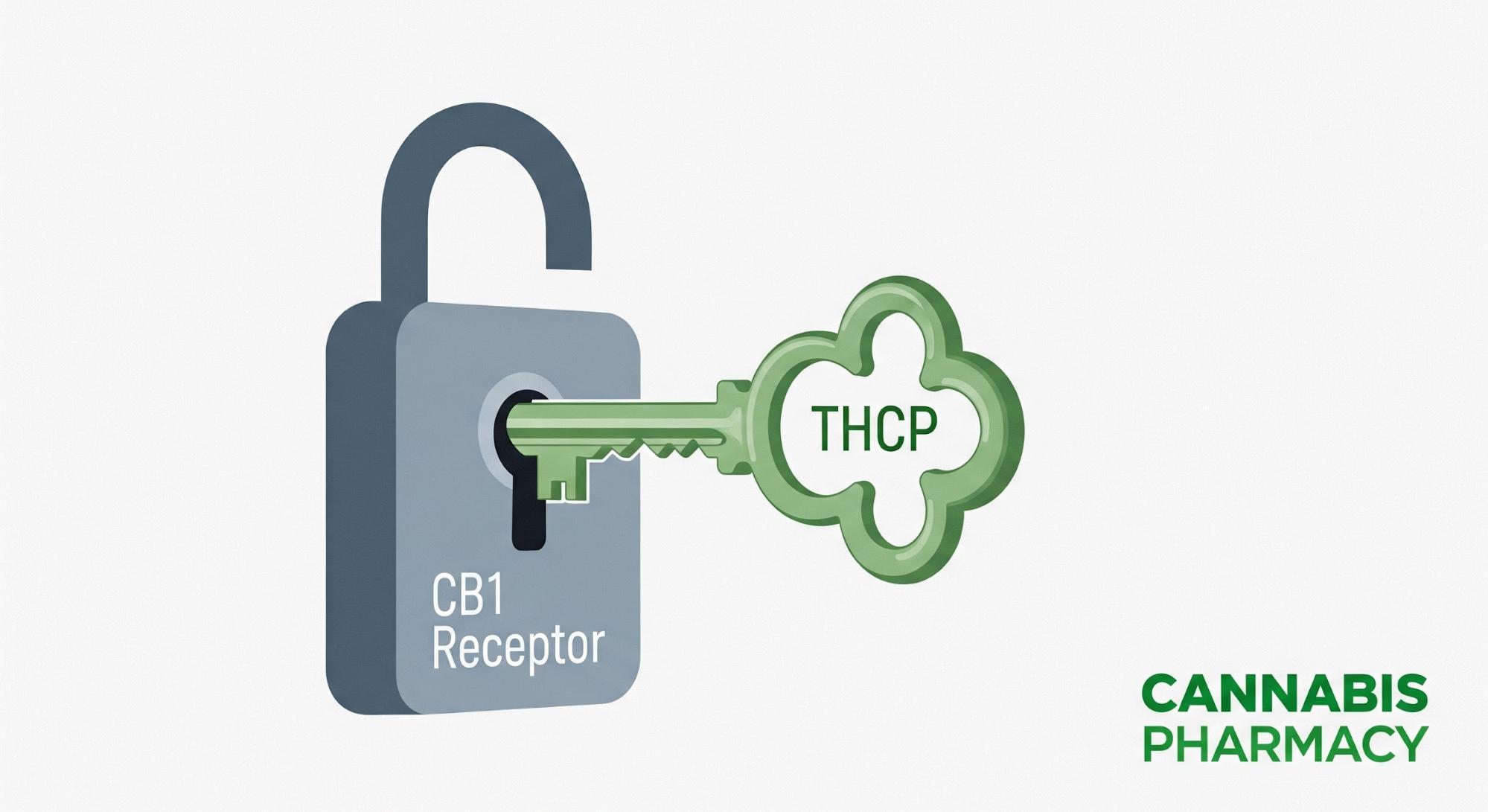
Think of the CB1 receptor as a lock and a cannabinoid as a key. THC’s five-carbon chain makes it a good key that fits the lock well. THCP’s longer seven-carbon chain makes it a near-perfect key that fits into the lock much more snugly and securely. The study found that this “snug fit” was approximately 33 times stronger than THC’s.
So, is THCP stronger than THC in practice? While the enhanced binding affinity doesn’t translate to a high that is literally 33 times more intense, it does suggest a much more powerful interaction. Many user reports describe the THCP effects as being noticeably more potent, often feeling somewhere between 5 to 10 times stronger than a comparable dose of THC. This increased THCP potency means the experience could be more profound and potentially longer-lasting.
Comparing Potential Effects: THCP vs. THC
When comparing THC vs THCP, it’s important to remember that individual experiences can vary widely based on tolerance, body chemistry, and dosage.
- Psychoactive Effects: Both cannabinoids may produce similar effects, such as euphoria, relaxation, altered perception of time and space, and increased appetite. However, due to its potency, user reports often describe THCP’s effects as more intense, immersive, and even more psychedelic in nature. The onset of these effects also depends on the ingestion method, with fast-acting methods like inhaling from THCa pre-rolls differing from the slower build of edibles like THC-infused chocolate cones.
- Therapeutic Potential: Given its structural similarity to THC, researchers are interested in whether THCP might offer similar therapeutic potential, possibly at lower doses. Areas of interest could include pain relief, anti-nausea, and anti-inflammatory properties. However, clinical research is extremely limited, and these possibilities are still speculative.
- Duration: Some users report that the effects of THCP may last significantly longer than those of THC. An experience that might last a few hours with THC could potentially extend much longer with THCP, which is a critical factor to consider when planning usage.
Safety and Legality: What to Know Before You Try
As with any powerful compound, understanding the safety and legal landscape is paramount. Exploring new cannabinoids like THCP requires an extra layer of caution.
- Safety: The most significant safety consideration with THCP is its high potency. The risk of experiencing uncomfortable side effects (like anxiety, paranoia, dizziness, or dry mouth) could be higher if one takes too much. For anyone curious about this cannabinoid, the universal advice is to start with a very small dose and wait a considerable amount of time to assess the effects before considering more. For more in-depth information, it’s wise to review the facts about whether THCP is safe.
- Legality: The legal status of THCP is complex and exists in a gray area. Federally, the 2018 Farm Bill legalized hemp and its derivatives containing less than 0.3% Delta-9 THC. Most THCP on the market is derived from hemp, which is how manufacturers sell it. However, some states have enacted their own laws that ban or restrict intoxicating hemp-derived cannabinoids. Because its status can change, it’s always best to check your local laws before making a purchase.
At Cannabis Pharmacy, we believe in full transparency, which is why we make our lab test results for all products easily accessible.
Navigating the Cannabinoid Frontier
THCP represents an exciting frontier in cannabis science. It is a naturally occurring, highly potent cannabinoid that stands apart from THC due to its unique molecular structure and powerful binding affinity to our body’s receptors. The “33x stronger” claim is a fascinating piece of science about its binding potential, not a direct measure of the high you will experience. User reports confirm it is a significantly more powerful compound that demands respect and a cautious approach.
As the world of cannabinoids continues to reveal its secrets, from THC and THCP to other compounds like HHC, staying educated is your best tool. Explore our blog for more insights or browse our carefully curated shop for quality you can trust.
If you have questions and want to speak with our knowledgeable team about your options, we’re here to help—feel free to give us a call when you’re ready.
FAQs
What is the main difference between THCP and THC?
The primary difference is their chemical structure. THCP has a seven-carbon alkyl side chain, while THC has a five-carbon chain. This longer chain allows THCP to bind more effectively to CB1 receptors in the endocannabinoid system, which is believed to be the reason for its higher potency.
Does THCP feel 33 times stronger than THC?
No. The “33x” figure refers to its binding affinity in a laboratory setting, meaning it attaches to the CB1 receptor about 33 times more effectively than THC. Most users report the subjective psychoactive experience feels significantly stronger than THC, but not literally 33 times more intense.
Is THCP legal to purchase in the United States?
THCP’s legality is complex. Federally, it is legal if derived from hemp containing less than 0.3% Delta-9 THC, per the 2018 Farm Bill. However, several states have passed laws that ban or restrict all intoxicating hemp-derived cannabinoids, so its legality varies by state. Always check your local regulations.
How long do the effects of THCP last?
While research is still limited, anecdotal reports from users suggest that the effects of THCP may have a longer duration than traditional THC. The exact duration depends on the dose, individual metabolism, and method of consumption.
