

 All THCA Flower
 All THCA Pre-Roll









 Spend & Save: Get 10% off orders $100+ | 15% off orders $150% | 20% off orders $200+




The Science of THCA: From Biosynthesis to Bioavailability

Key Takeaways
- THCA’s Identity: Tetrahydrocannabinolic acid (THCA) is the natural, non-psychoactive acidic precursor to THC found in raw and uncured cannabis plants.
- Plant-Made: THCA is created in the plant’s trichomes through a process called biosynthesis, where an enzyme converts a “mother cannabinoid” (CBGA) into THCA.
- The Heat Factor: The transformation from non-psychoactive THCA to psychoactive Delta-9 THC happens through a chemical reaction called decarboxylation, which is activated by heat or light.
- Body Interaction: The body’s absorption and use of THCA (its bioavailability) largely depend on whether it has been decarboxylated. Raw THCA and heat-activated THC may interact with the endocannabinoid system in different ways.
The Journey of a Cannabinoid
The world of cannabis is rich with complex compounds, each with a unique story. To truly understand the products many are exploring today, we must look at their scientific origins and how they interact with the human body. One of the most important yet often misunderstood is Tetrahydrocannabinolic acid, or THCA. It’s the starting point for the famous THC molecule, but its own narrative is fascinating.
This article will take you on a scientific journey, tracing the life of THCA from its creation inside the plant (biosynthesis) to how it is transformed and potentially absorbed by the body (bioavailability). Understanding this process empowers you to make more informed decisions about the wide world of cannabinoids.
What is Tetrahydrocannabinolic Acid (THCA)? The Foundation
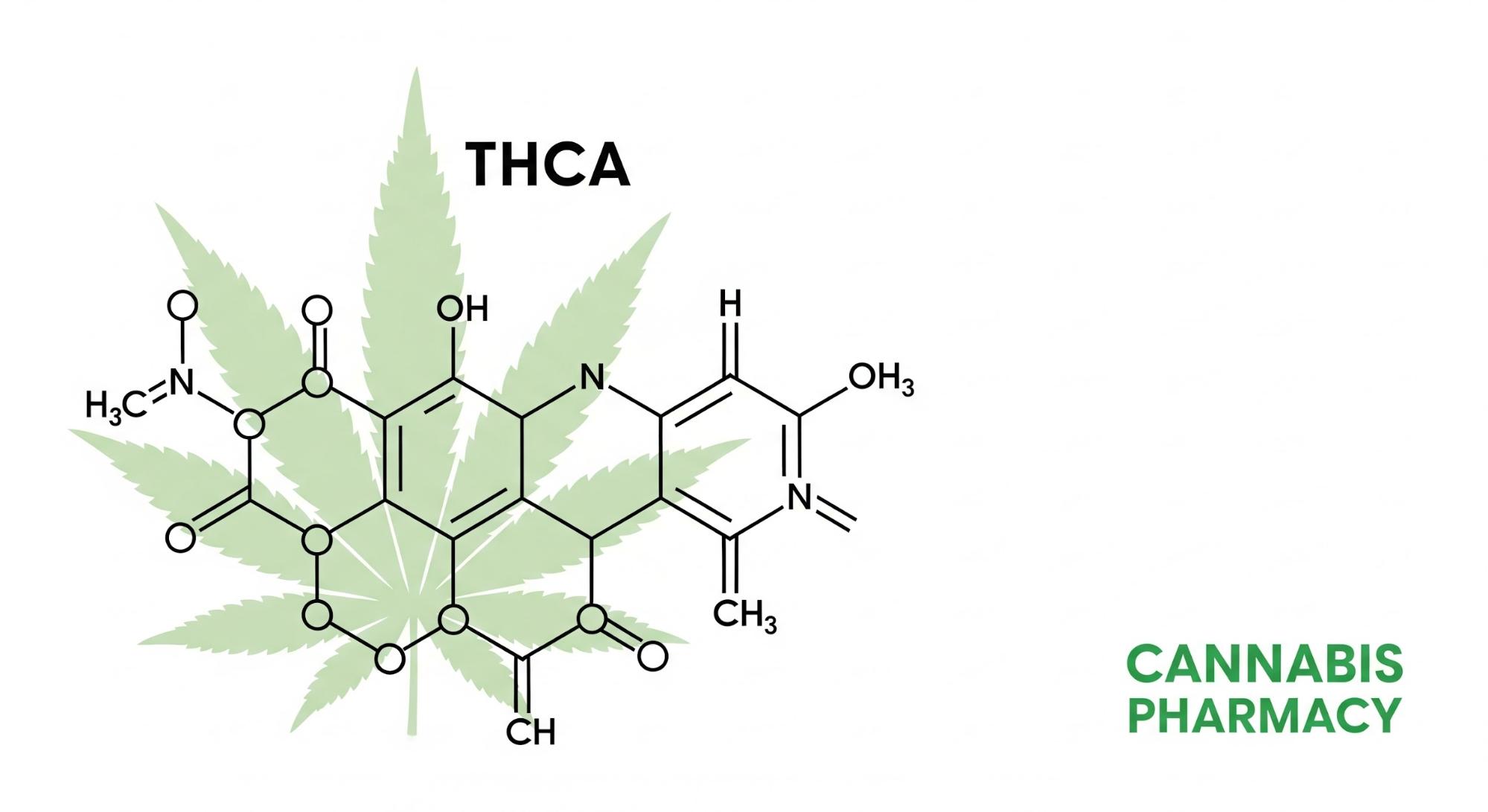
At its core, THCA is an acidic cannabinoid, a compound found naturally in the Cannabis sativa plant. For the scientifically curious, its chemical formula is C₂₂H₃₀O₄. It is the most abundant non-psychoactive cannabinoid found in fresh, undried cannabis.
The key difference between THCA and THC lies in their molecular structures. THCA has an extra carboxyl group (COOH) attached to it. This seemingly minor addition is critical—it changes the molecule’s shape and prevents it from binding effectively with the CB1 receptors in the brain, the interaction responsible for the intoxicating effects commonly associated with THC. This structural distinction is central to understanding the THCA vs. THC conversation. In its raw, stable state, THCA does not produce that characteristic “high.”
The Genesis of a Cannabinoid: Understanding THCA Biosynthesis
So, how does the cannabis plant create this unique compound? The process, known as biosynthesis, is an elegant example of nature’s chemistry at work. It all begins with a foundational compound often called the “mother cannabinoid”: Cannabigerolic acid (CBGA). CBGA is the primary precursor from which most other well-known cannabinoids are derived.
Inside the plant’s trichomes—the tiny, crystalline resin glands that glitter on the surface of the flower—a specific enzyme called THCA synthase gets to work. This enzyme acts as a catalyst, triggering a chemical reaction that converts CBGA directly into THCA. These trichomes are microscopic factories, tirelessly producing the compounds that make each cannabis plant unique. This natural manufacturing process is why fresh products like raw THCA flower are rich in THCA.

The Great Transformation: The Science of Decarboxylation
The journey from THCA to THC is one of transformation, driven by a process called decarboxylation. This is a chemical reaction that removes the aforementioned carboxyl acid group (COOH) from the THCA molecule. What triggers this change? Primarily, heat and time.
When THCA is exposed to a sufficient amount of heat, the bond holding the carboxyl group breaks, releasing carbon dioxide and leaving behind the now-activated Delta-9 THC molecule. This is the compound known for its psychoactive properties. The methods of decarboxylation are familiar to many cannabis users, even if the scientific term isn’t. Processes like smoking, baking, or using a
THCA vape pens are all practical applications of decarboxylation. Depending on the method of consumption, the efficiency of this conversion can vary, influencing the final profile of the cannabinoids being consumed.
Bioavailability: How the Body May Interact with THCA
Once a cannabinoid is consumed, its journey isn’t over. The next crucial concept is bioavailability, which refers to the proportion of a substance that enters the bloodstream and becomes available to have an active effect. The bioavailability of THCA and its converted form, THC, differs significantly based on how it’s consumed.
- Raw THCA: When THCA is consumed in its raw state—for example, in juices or smoothies—it doesn’t undergo full decarboxylation. It enters the body as THCA and is thought to interact with the endocannabinoid system (ECS) differently than THC. User reports and preliminary scientific inquiries are exploring how raw THCA may influence the body, but this research is still in its early stages.
- After Decarboxylation: The bioavailability of the resulting THC changes dramatically depending on the ingestion method.
- Inhalation: When using products like THCA dabs, the decarboxylation is instant. This method is reported to offer high bioavailability and a rapid onset, as the compound enters the bloodstream directly through the lungs. Users often report feeling effects within minutes.
- Ingestion: With oral ingestion, such as in edibles, the process is much different. The THC is metabolized by the liver, which can alter the molecule and its effects. Bioavailability may be lower, and the body’s response time is generally longer. User reports often suggest a potential onset time in the range of 90-120 minutes. You can find out more by checking our extensive shop of products.
The Current Legal Landscape of THCA
Navigating the legal status of cannabinoids can be complex. On a federal level, the 2018 Farm Bill distinguishes hemp from marijuana based on its Delta-9 THC concentration, with the legal limit set at 0.3% by dry weight. Because THCA is chemically distinct from Delta-9 THC, products containing THCA may fall into a different legal category under this federal definition.
However, it is crucial to understand that this is a nuanced and evolving area of law. State and local regulations vary significantly and are subject to frequent change. Some states may have specific rules regarding “total THC,” which could include the potential THC content from THCA. As a consumer, it is your responsibility to check your local regulations. For more information, you can review our legal-mumbo-jumbo page. We always recommend confirming the latest laws in your area.
From Molecule to Method
Understanding the science of THCA provides a much fuller picture of the cannabis plant and its potential. We’ve seen that THCA is the natural, non-psychoactive precursor to THC, meticulously created through biosynthesis in the plant’s trichomes. The application of heat through decarboxylation is the key that unlocks its transformation into THC, fundamentally changing the molecule’s structure and how it may interact with the body. By grasping the entire journey from biosynthesis to bioavailability, you are better equipped to navigate your options and make choices that align with your wellness goals. If you have questions about the science behind products like our THCA blunts or our lab-tested Uplift THCA Pre-Rolls, our knowledgeable team is here to help—we welcome you to give us a call.
Frequently Asked Questions (FAQs)
Is THCA psychoactive?
In its raw, natural state, THCA is generally considered non-psychoactive. It does not produce the intoxicating effects associated with THC because its molecular structure prevents it from binding effectively with CB1 receptors in the brain. It only becomes psychoactive after being converted to THC through decarboxylation (heating).
What is the main difference between THCA and THC?
The primary difference is chemical. THCA has an extra carboxyl group (COOH) that THC does not. This structural difference is why THCA is non-psychoactive in its raw form. Removing this group via heat (decarboxylation) is what converts THCA into the psychoactive compound THC.
How does the body process raw THCA?
When consumed without being heated, THCA is absorbed by the body in its original form. It is believed to interact with the endocannabinoid system and other bodily systems in ways that are different from THC. Research into the specific mechanisms of raw THCA is ongoing.
Can you find THCA in edibles?
It depends on how the edible was made. If raw cannabis is used without heating, the edible would contain THCA. However, most cannabis edibles are made with activated THC (cannabis that has already been decarboxylated during the cooking or infusion process) to provide the expected psychoactive effects.
Is THCA legal?
The legality of THCA is complex. Federally, under the 2018 Farm Bill, hemp products are legal if they contain less than 0.3% Delta-9 THC. Since THCA is not Delta-9 THC, many products are sold under this provision. However, state laws vary greatly, and some consider total potential THC, which may affect THCA’s legality. Always check your local laws and regulations before purchasing.